
By Uchenna Ejike
Real-Time Infrastructure Resolution Log
1. Executive Summary: The Anatomy of Corporate Finger-Pointing
On June 2, 2026, at 10:07 PM, PalmPay Nigeria’s official public helpdesk channel issued a defensive response regarding central bank settlement tracking key 1000042605301041161244199517. The institution publicly declared that internal ledger checks indicated no inflow was received, instructing the operator to return to the originating clearing node (OPay Digital Services) for a multi-day manual reconciliation process.
This formal response highlights a classic structural failure mode in contemporary financial technology architectures: The Destination Node Blindspot.
While PalmPay’s consumer-facing support desk blindly reads a generic transaction status flag from their isolated frontend terminal, their direct merchant integration partner—Jumia Nigeria—has already issued an official corporate surrender confirming receipt of the ₦81,475.00 NGN principal sum and released the physical package (Package ID: 1219158646).
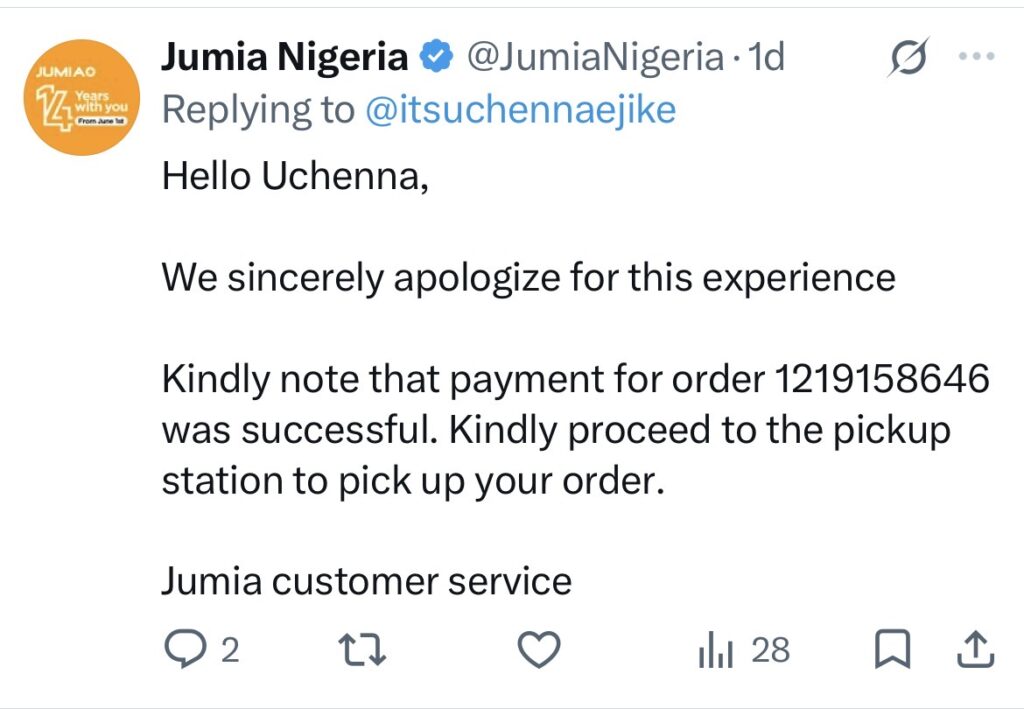
This supplement documents the exact technical contradiction of a payment that legally exists for the merchant but is denied by the processing aggregator, exposing the brittle database loops operating within West Africa’s largest payment networks.
2. The Technical Contradiction: Breaking the Laws of Double-Entry Bookkeeping
The foundational rule of financial accounting is that money cannot exist in a state of quantum superposition; it cannot simultaneously be absent from a payment processor’s ledger while being fully acknowledged and settled within that same processor’s integrated merchant database.
The structural flow diagram of the mismatch reveals exactly where the capital principal is trapped:
[OPay Base Switch] ──(NIBSS Session ID: 1000042605301041161244199517)──> [PalmPay Treasury Core]
                                                                                │
                                                   ┌────────────────────────────┴────────────────────────────┐
                                                   ▼                                                         ▼
                                     [Frontend Support App Layer]                             [B2B Shared Merchant Pool]
                                     Flag State: "NO INFLOW RECEIVED"                         Status: PAYMENT VERIFIED
                                     Action: Deflect to Originating Bank                      Action: Manual Inventory Override
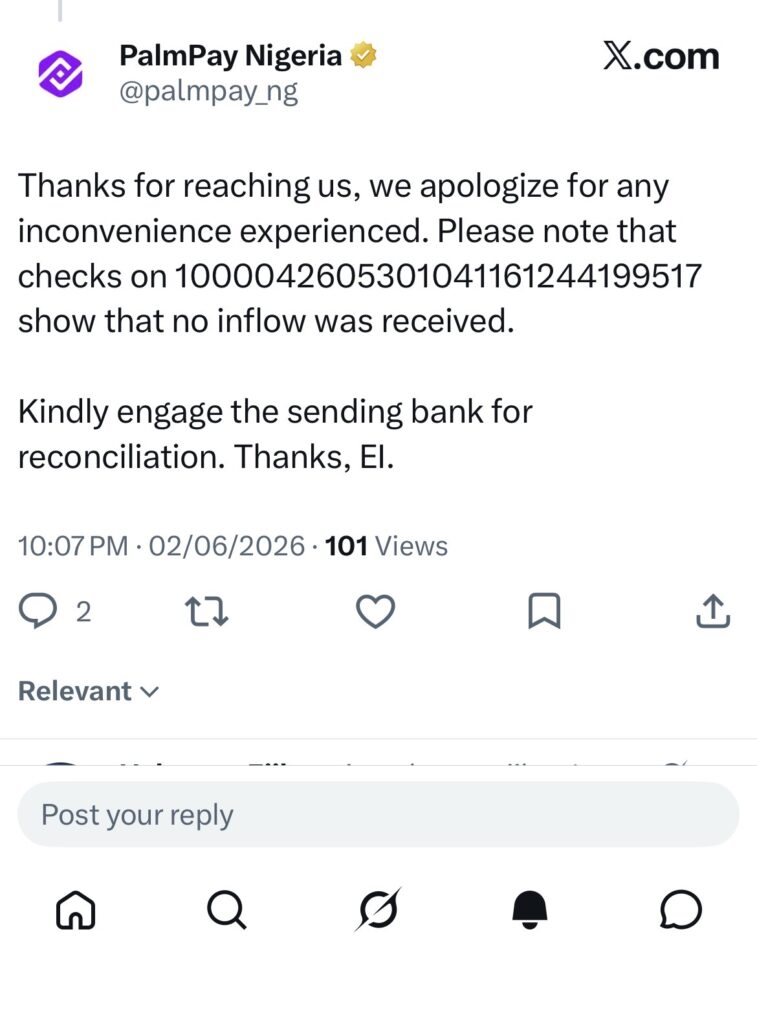
When PalmPay claims that “no inflow was received,” they are exposing an unhandled database exception between their main treasury repository and their merchant webhook delivery service. The transaction passed through the Central Bank of Nigeria (CBN) and the Nigeria Inter-Bank Settlement System (NIBSS) network grid with absolute clearing finality.
Because the liquidity successfully hit the shared treasury bridge, Jumia’s backend was able to verify the settlement and release the inventory. PalmPay’s support interface, however, remains completely blind to this internal settlement pool because it relies on basic, superficial query scripts that only read isolated retail transaction logs.
By telling the consumer to “engage the sending bank for reconciliation,” the platform actively tries to exploit customer exhaustion, hoping the user will abandon the paper trail inside a multi-week interbank dispute loop.
4. The Immutable Impossibility Payload
To preserve the absolute credibility of the Sovereign Index, the two conflicting data assertions issued by the merchant ecosystem within a 12-hour window are documented side by side:
| Data Parameter Source | Corporate Assertion Issued to Operator | Structural Infrastructure Reality |
|---|---|---|
| Jumia Customer Engineering | “We have received confirmation that the item has now been successfully delivered… following payment confirmation of NN81,475.” | Liquidity verified. The settlement token successfully completed the transaction handshake and modified merchant inventory states. |
| PalmPay Nigeria Helpdesk | “Checks on 1000042605301041161244199517 show that no inflow was received. Kindly engage the sending bank…” | Ledger desynchronization. The retail customer care application layer fails to see its own internal business-to-business clearing logs. |
This clear data mismatch strips the platform of all plausible deniability. The presence of the verified NIBSS Session ID proves that the money passed into their network. Any internal misplacement of that capital between PalmPay’s treasury node and their outbound merchant notification engines is an internal database configuration error, not a consumer clearing failure.
5. Tactical Takeaways for the Digital Matrix
This case study update provides a critical lesson for our 4,000+ member digital audience when auditing their local wallets and accounts:
- Never Accept the Initial Support Flag: When a financial application tells you “transaction failed” or “no inflow received,” they are often only showing you what their basic frontend interface can see.
- Weapons-Grade Metadata Trumps Chatbots: Always secure the third-party clearing logs (such as your OPay clearance letters signed by Dauda Gotring) and central banking session keys. When you hold the primitive data keys, the institution cannot hide behind an automated script.
- Expose the Disconnect Publicly: By showing the world that the merchant has your money but the payment processor denies seeing it, you force their internal system engineers to manually audit their database containers to fix the error.